The Albarati Act Won't Stop Contraband Phones. It Will Just Clog the Courts.
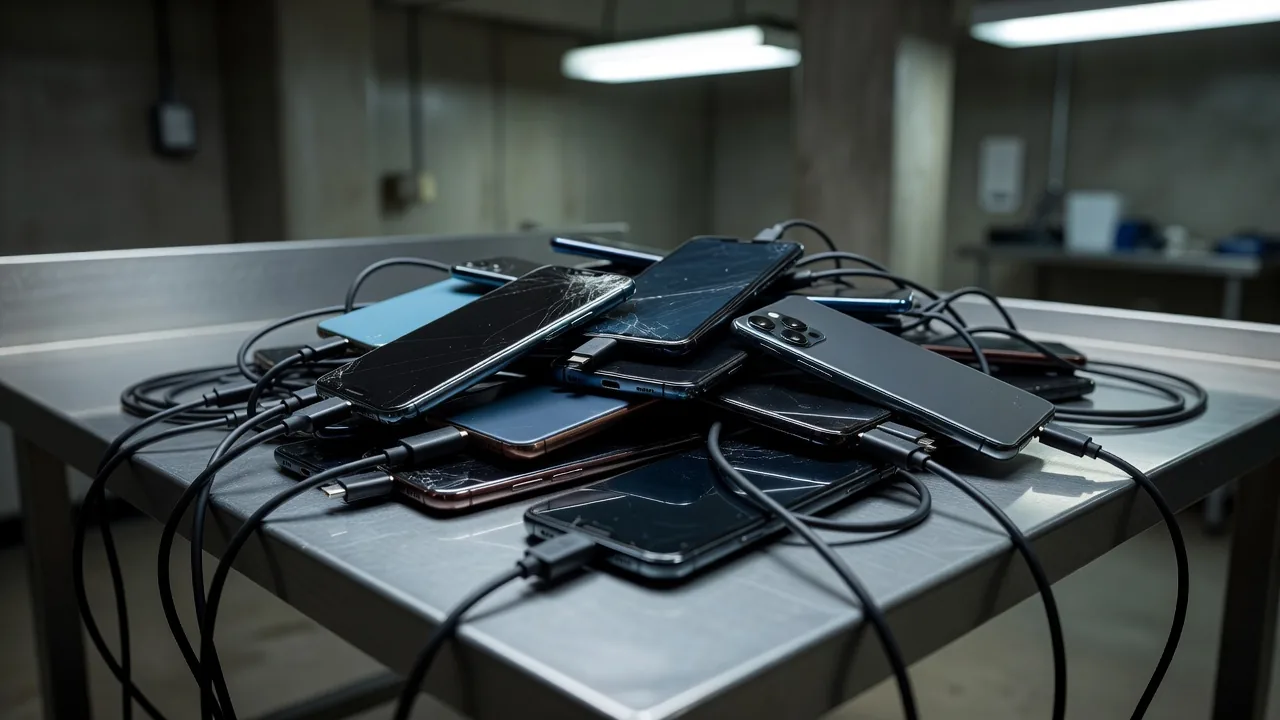
S. 736, the Lieutenant Osvaldo Albarati Stopping Prison Contraband Act, is sitting in the House. The Senate passed it by voice vote on June 10. It doubles the maximum sentence for smuggling a cell phone into a federal prison, from one year to two, and turns the offense into a felony. Helen Andujar Albarati, the widow of the lieutenant it’s named for, wrote to Acting Attorney General Todd Blanche on August 3 asking the Justice Department to push it through.
Her husband was murdered for doing his job, and she is right that contraband phones do real damage. This bill still won’t fix the problem. It mistakes sentencing for policy.
The case the bill is built on happened on February 26, 2013, and it happened in Puerto Rico, not at a mainland facility. Osvaldo Albarati, 39, worked the Special Investigations Section at Metropolitan Detention Center Guaynabo, the federal detention center in Guaynabo, Puerto Rico. He was known for aggressive contraband seizures. Gunmen followed him home from a shift and shot him dead on an expressway. According to the Justice Department, an inmate watched Albarati leave the facility and passed word to the hired gunmen using a contraband phone. The plot leader, Oscar Martinez-Hernandez, was convicted in 2019 and sentenced to life in prison. Eight other men pleaded guilty and got between 10 and 33 years.
That is the only killing in more than 13 years tied to a contraband phone in the BOP, and look at what it actually was. It wasn’t a phone doing harm. It was a targeted contract hit on a specific officer who had made himself a problem for a specific inmate. The phone was a communication channel. A visitor, a note, or a corrupt staff member passing a message would have done the same work. And the law already had an answer for what happened next: life in prison. Doubling the penalty on the phone doesn’t touch any of that.
The BOP is now recovering more than 2,000 phones a month, and in over 13 years of that volume there has been exactly one killing tied to a contraband phone. That is the statistical case against the bill all by itself. And the recovered phones are only the ones staff caught. For every phone the BOP recovers, there are probably ten it misses, which means the real population of active contraband phones outnumbers anything the agency counts. Across hundreds of thousands of phone-years of inmate use, one murder was planned with the help of a contraband phone. The odds of any given phone being used to plan a killing are vanishingly small. Phones are used for family calls, relationships, and everyday crime. Planning a murder with one is a statistical outlier, and building federal sentencing policy around a single outlier is not policy. It is a memorial with a penalty attached.
The BOP does not publish a clean annual count of recovered phones. The available figures come from older Inspector General reviews, scattered facility reports, and recent statements from leadership. What they show is a flood. In a February 2026 video address, Director William K. Marshall III said staff had recovered nearly 17,000 cell phones in the roughly 10 months since he took office in April 2025. That is an annual pace well above 20,000 phones. The same remarks counted more than 4,300 weapons and 228 attempted drone drops as part of a broader surge in contraband.
The last solid official count shows how fast the problem grew. A 2016 report from the Justice Department’s Inspector General found the BOP recovered at least 8,700 contraband phones across fiscal years 2012 through 2014, roughly 2,900 a year. The report also noted that BOP’s tracking of recoveries was incomplete and spread across multiple systems, so the real number was likely higher even then. It is several times higher now. Official BOP posts in mid-2026 reported weekly recoveries of 295 phones in one week and 620 in another. Staff at Thomson Federal Prison pulled more than 400 phones in 2024. Against that flood, the difference between a one-year and a two-year sentence is nothing.
It changes nothing about the economics, either. Contraband in federal facilities runs on standardized rates. Anything that fits in a manila envelope, phones included, moves for around $10,000. Phones get in through corrupt staff, visitors, throws over fences, and drones. Federal sentencing guidelines already cap staff phone smuggling at one year, and in practice most staff caught with phones are fired, not prosecuted. A smuggler weighing a $10,000 envelope against a prosecution that almost never happens does not care whether the ceiling is one year or two. Deterrence requires a real chance of getting caught. The BOP can barely staff its facilities, let alone investigate its own.
And most of these cases never reach a courtroom at all. Most recovered phones end in internal discipline, loss of good-time credit and the like, not federal charges. The United States Sentencing Commission counted just 407 people sentenced in federal court for cell-phone contraband offenses across fiscal years 2019 through 2023. About 81 people a year, against roughly 20,000 phones. S. 736 would push more of these cases into federal court, which means more dockets and more federal prosecutors spending time on phone cases. The people most likely to land there are the carriers: family members and low-level staff. The bill doesn’t even raise the penalty for inmates who possess phones. The Congressional Budget Office analysis says so. For inmates already serving effectively life sentences, one more year stacked on top deters no one.
The one part of S. 736 that might matter is buried in it. The bill requires the BOP director to review and update the agency’s policies on inmates who make, possess, or obtain prohibited items. That is the actual lever. Inmates keep paying for phones because the BOP prohibits the thing 156,000 people demonstrably want and provides no substitute. Its own tablets can do everything but connect to a network. You don’t kill a black market by doubling the sentence for supply. You kill it by removing the demand, which means regulated, monitored communication access. We’ve said it before and we’ll say it again: reclassify phone possession, stop treating a phone like an escape tool, and the smuggling economy collapses on its own.
Jon Zumkehr, an advocate who worked on the legislation, said contraband phones are weapons. Helen Albarati wrote that every active contraband phone is a weapon. In the one case that ended in murder, the phone was a tool and the weapon was a gun, and the men who used it are already locked up for it. Honoring Lt. Albarati’s memory deserves a law that works. This one won’t.
Sources
- Corrections1, "Bill named for BOP lieutenant killed in ambush targets contraband cellphones," August 26, 2026.
- Department of Justice, case materials on the murder of Lt. Osvaldo Albarati, Metropolitan Detention Center Guaynabo.
- Department of Justice Office of the Inspector General, "Review of the Federal Bureau of Prisons' Contraband Interdiction Efforts," 2016.
- BOP Director William K. Marshall III, video address on contraband recoveries, February 2026.
- United States Sentencing Commission, sentencing data for cell-phone contraband offenses, fiscal years 2019 to 2023.